INDX
Social Impact Design | Design Research | Systems Thinking
Fold Shift
Low-Tech Visuospatial Design
Inspiration
Could a research-informed visuospatial task work without a screen?
Released
(Project)
Fold Shift
Fold Shift
Social Impact Design | Design Research | Systems Thinking
Social Impact Design | Design Research | Systems Thinking
Keep the thinking. Lose the technology.
Keep the thinking. Lose the technology.
Social Impact Design Design Research Interaction Design Prototyping
TYPE OF WORK
Jonathan Holiday School
CLIENT
2 years
TIMEFRAME
RELEASED
(Introduction)
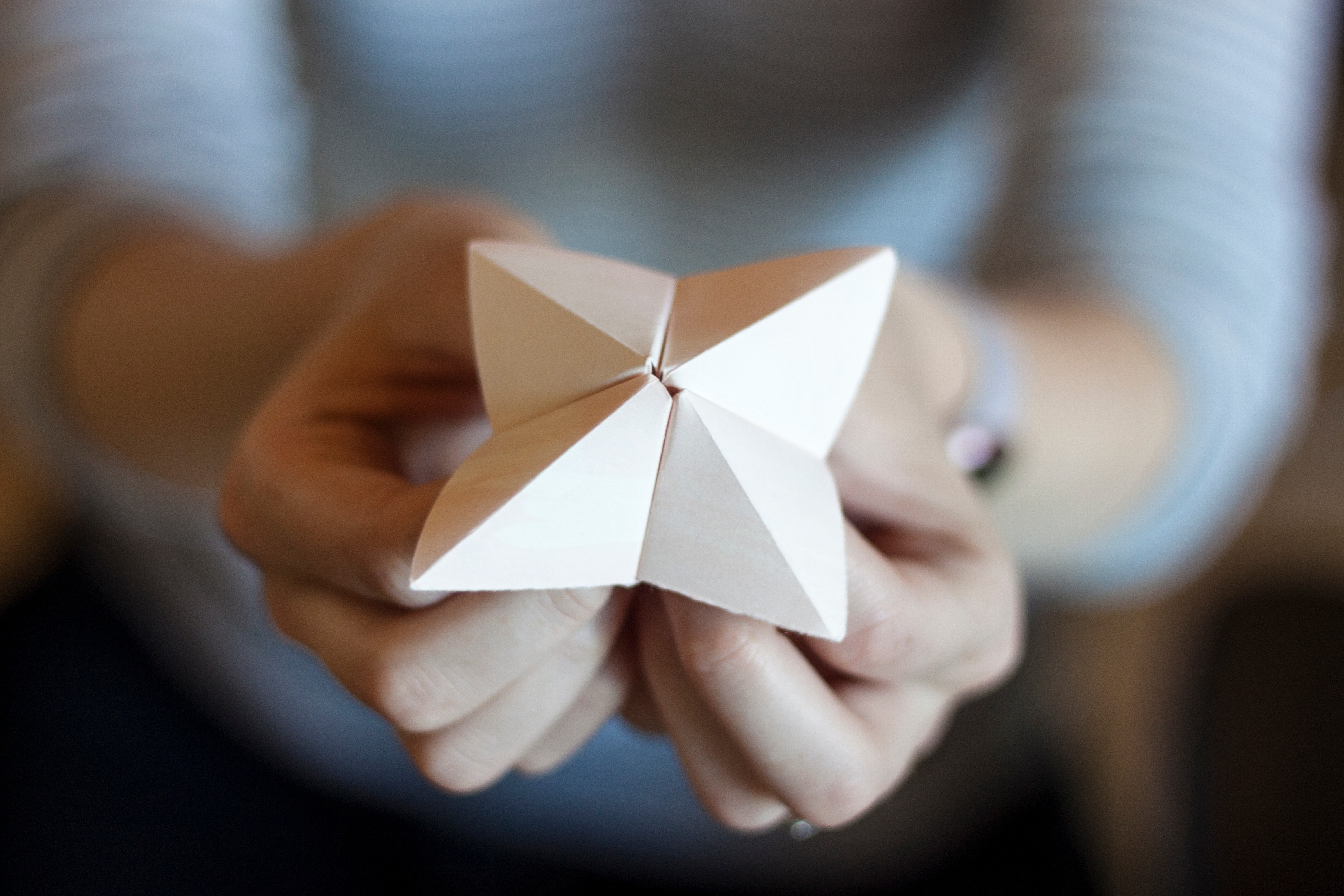
One Fold is a low-tech paper-folding puzzledesigned for settings where electricity, internet access, materials, and staff may be limited.
One Fold is a low-tech paper-folding puzzledesigned for settings where electricity, internet access, materials, and staff may be limited.
(Approach)
No app. No device. No specialist equipment. A paper-folding puzzle that can be used across language barriers & cultures.
No app. No device. No specialist equipment. A paper-folding puzzle that can be used across language barriers & cultures.
Just paper, pattern, attention, and play.
Just paper, pattern, attention, and play.
I contacted Professor Emily Holmes, whose research into visuospatial tasks helped inspire the project, to understand which parts of the underlying approach mattered most. Her guidance reinforced several design principles: keep the activity strongly visuospatial rather than verbal, make it engaging without becoming too difficult, and keep any memory cue brief, gentle, and private. Those principles became design constraints rather than additions to the activity.
I contacted Professor Emily Holmes, whose research into visuospatial tasks helped inspire the project, to understand which parts of the underlying approach mattered most. Her guidance reinforced several design principles: keep the activity strongly visuospatial rather than verbal, make it engaging without becoming too difficult, and keep any memory cue brief, gentle, and private. Those principles became design constraints rather than additions to the activity.
Just paper, pattern, attention, and play.
Just paper, pattern, attention, and play.
(Challenge)
How do you translate research without translating away what makes it work?
How do you translate research without translating away what makes it work?
Moving an intervention from a controlled research setting into a classroom changes almost everything: technology, language, facilitation, cultural context, safeguarding, and available capacity. The challenge was to reduce those demands without casually stripping away the characteristics the original research suggests may matter.
Moving an intervention from a controlled research setting into a classroom changes almost everything: technology, language, facilitation, cultural context, safeguarding, and available capacity. The challenge was to reduce those demands without casually stripping away the characteristics the original research suggests may matter.
(Solution)
Reduce the infrastructure. Protect the mechanism.
Reduce the infrastructure. Protect the mechanism.
The resulting system uses printable folding puzzles that rely primarily on spatial reasoning rather than written instruction. Difficulty is designed to sit in the productive middle ground between boredom and frustration, while the format allows activities to be reproduced locally with minimal materials.
The resulting system uses printable folding puzzles that rely primarily on spatial reasoning rather than written instruction. Difficulty is designed to sit in the productive middle ground between boredom and frustration, while the format allows activities to be reproduced locally with minimal materials.
Social Impact Design Design Research Interaction Design Prototyping
Development has been iterative and unusually physical: prototypes are folded, failed, redesigned, and tested again. The project is now moving toward a repeatable puzzle-generation system so that difficulty and layouts can vary without requiring every activity to be designed manually.
Development has been iterative and unusually physical: prototypes are folded, failed, redesigned, and tested again. The project is now moving toward a repeatable puzzle-generation system so that difficulty and layouts can vary without requiring every activity to be designed manually.
Could a research-informed visuospatial task work without a screen?
Could a research-informed visuospatial task work without a screen?
Could a research-informed visuospatial task work without a screen?
(Achievements)
From one folding exercise to a system designed to travel.
From one folding exercise to a system designed to travel.
One Fold has progressed from an early social-design concept into a tested family of physical prototypes with defined design rules. Research consultation helped establish the principles guiding the activity, while iterative testing is now informing a more systematic method for generating future puzzles.
One Fold has progressed from an early social-design concept into a tested family of physical prototypes with defined design rules. Research consultation helped establish the principles guiding the activity, while iterative testing is now informing a more systematic method for generating future puzzles.
Echoes From The Audience
Echoes From The Audience
“Good idea to do a low tech origami version. This should work.”
“Good idea to do a low tech origami version. This should work.”
Emily Holmes
Emily Holmes
Professor, Department of Women’s and Children’s Health Uppsala University
Professor, Department of Women’s and Children’s Health Uppsala University
Research-Informed
Direct consultation with Professor Emily Holmes helped translate existing visuospatial research into practical design criteria around cognitive demand, verbal instruction, difficulty, and safeguarding.
Built for Low Resources
The activity is designed around ordinary printable paper rather than devices, connectivity, specialised materials, or complex facilitation.
From Prototype to System
Physical testing evolved into the development of rules and computational approaches for generating new folding puzzles — turning an individual activity into a potentially scalable design system.
Research-Informed
Direct consultation with Professor Emily Holmes helped translate existing visuospatial research into practical design criteria around cognitive demand, verbal instruction, difficulty, and safeguarding.
Built for Low Resources
The activity is designed around ordinary printable paper rather than devices, connectivity, specialised materials, or complex facilitation.
From Prototype to System
Physical testing evolved into the development of rules and computational approaches for generating new folding puzzles — turning an individual activity into a potentially scalable design system.
Fold Shift
Low-Tech Visuospatial Design
Fold Shift
Low-Tech Visuospatial Design
Could a research-informed visuospatial task work without a screen?
Could a research-informed visuospatial task work without a screen?
Could a research-informed visuospatial task work without a screen?
SHARE THIS PROJECT ON SOCIAL
Wall of Courage
Immersive Design | Design Research | Augmented Reality
Experience Design UX Research Augmented Reality Research-through-Design
Wall of Courage
Immersive Design | Design Research | Augmented Reality
Wall of Courage
Immersive Design | Design Research | Augmented Reality
Memories of a Modest Reality × Folklore
Painting | Augmented Reality | Digital Folklore | Place-Based Art
Visual Art Augmented Reality Digital Storytelling Experimental Animation Creative Technology
Memories of a Modest Reality × Folklore
Painting | Augmented Reality | Digital Folklore | Place-Based Art
Memories of a Modest Reality × Folklore
Painting | Augmented Reality | Digital Folklore | Place-Based Art
Small Magicks × Emergence
Participatory Art | Zine Culture | Emergent Systems | Public Intervention
Participatory Art Editorial Design Zine / Independent Publishing Design Research Public Intervention Digital Storytelling
Small Magicks × Emergence
Participatory Art | Zine Culture | Emergent Systems | Public Intervention
Small Magicks × Emergence
Participatory Art | Zine Culture | Emergent Systems | Public Intervention